













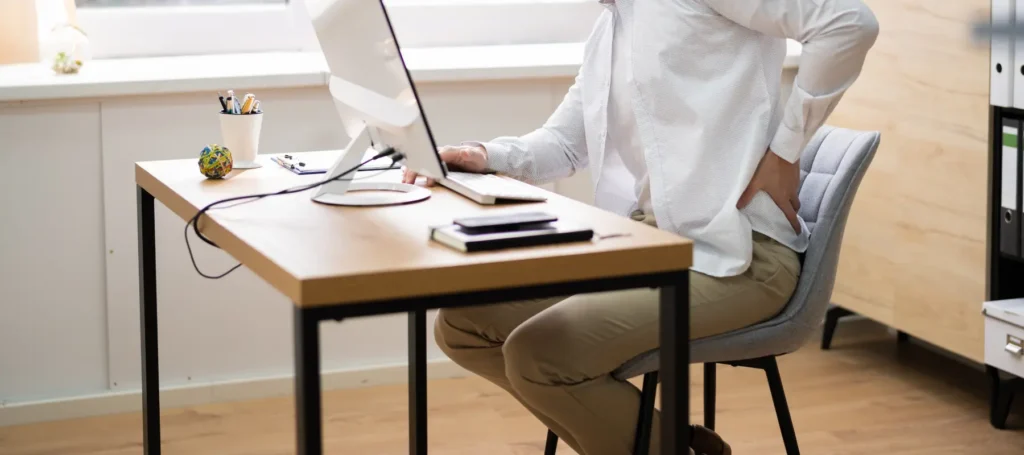
Your Desk Habits Matter More Than Perfect Posture
If you spend most of your workday at a desk, you probably know the feeling. You start the morning sitting relatively upright. A few hours later, your shoulders have rounded forward, you’re leaning toward your screen and your lower back is starting to ache. While it’s easy to blame poor posture, reducing back pain at your desk isn’t as simple as reminding yourself to “sit up straight.”
At Advancing Movement with Physical Therapy (AMPT), we help people in Houston understand how everyday movement habits affect the way their bodies feel and function. When it comes to desk-related back pain, small changes to how you sit, move and work throughout the day help support a more comfortable workday.
Why Does Sitting At A Desk Cause Back Pain?
Sitting itself isn’t necessarily the problem. The amount of time you spend sitting and how little you move while doing it often matter more.
When you stay in the same position for long periods, certain muscles have to keep working to support you while others aren’t being challenged much at all. Over time, that can contribute to muscle fatigue, stiffness and discomfort.
Your workstation plays a role, too. A monitor that’s too low, a chair that doesn’t provide enough support or a keyboard that keeps you reaching can place additional demands on your body throughout the day.
Over the course of a long workday, those factors often leave your back feeling stiff and uncomfortable.
Does Slouching Cause Back Pain?
Slouching can contribute to discomfort, but it doesn’t mean you’ve damaged your back every time you catch yourself hunched over your keyboard.
There isn’t one perfect posture that you need to maintain from 9 to 5. Instead, think of good desk posture as something dynamic rather than rigid. Even a position that looks like “perfect” posture can become uncomfortable if you stay there long enough.
The goal isn’t to sit perfectly straight all day. It’s to find a supported position while giving your body opportunities to move throughout the day.
How To Stop Slouching At Your Desk
If you constantly catch yourself slouching, telling yourself to sit up straighter probably isn’t going to create a lasting change. Instead, look at what might be making that position feel easier for your body.
Start with your workstation.
Your feet should have somewhere comfortable to rest rather than dangling from your chair. Position your keyboard and mouse where you can reach them without repeatedly leaning forward. Your screen should be positioned so you can see it comfortably without craning your neck toward it.
Your chair matters, but you don’t necessarily need the fanciest ergonomic chair on the market. What matters is whether your setup supports your body and allows you to work comfortably.
And when you notice yourself starting to slump? Instead of treating it as a failure, use it as a reminder that your body might be ready for a different position.
Stand up. Walk for a minute. Roll your shoulders. Then come back and reset.
How To Relieve Back Pain From Sitting At A Desk
If your back starts bothering you halfway through the workday, movement is a good place to start.
1. Change Positions Regularly
You don’t have to wait until your back hurts to move. Look for natural opportunities throughout your day to change positions.
Stand while you’re on a phone call. Walk to refill your water. Get up between meetings. If you have a sit-to-stand desk, alternate between sitting and standing rather than assuming standing all day is automatically better.
Small amounts of movement throughout the day can be more realistic than trying to undo eight hours of sitting with one stretch at the end of the day.
2. Give Your Back Some Support
When sitting, try to keep your feet supported and sit far enough back in your chair that you aren’t constantly holding yourself upright without assistance.
If your chair doesn’t comfortably support your lower back, adjusting its position or adding simple lumbar support may help.
The goal isn’t to lock yourself into place. It’s to make your resting position comfortable enough that your muscles don’t have to work unnecessarily hard just to keep you there.
3. Move Your Upper Body
Desk work tends to keep your arms and shoulders in front of you for long stretches of time.
Periodically move in the opposite direction. Gently roll your shoulders backward, straighten your upper back or reach your arms overhead. These movements don’t need to be intense to give your body a break from its working position.
4. Get Up And Walk
One of the simplest things you can do for a body that has been sitting is to stop sitting for a few minutes.
You don’t need a full workout. A short walk around the office or your home gives your hips, back and legs an opportunity to move through positions they haven’t experienced while sitting.
Try tying movement to something already built into your workday so you don’t have to remember another task. Get up after a meeting, walk while taking certain calls or move for a few minutes before starting your next project.
5. Build Strength Away From Your Desk
What you do outside your workday matters, too.
Your body needs strength and mobility to comfortably handle the demands of a long workday. Improving both can make sitting and moving throughout the day easier to manage.
That doesn’t mean everyone with desk-related back pain needs the same exercises. Everyone moves differently, which is why an exercise that helps one person isn’t necessarily the right choice for someone else. If a movement causes pain, don’t force your way through it. An individualized assessment helps determine which movements are appropriate for you.
When Should You See A Physical Therapist For Back Pain?
Occasional stiffness after a long workday may improve when you start moving more or make a few adjustments to your workspace. But if your back pain keeps returning or begins getting in the way of your daily life, it’s time to look beyond your desk setup.
A physical therapist can take a closer look at how your body moves to better understand what may be contributing to your symptoms. From there, they can help you find an approach that works for you.
That distinction matters. You aren’t just a person with “bad posture,” and treatment shouldn’t revolve around forcing your body into one supposedly perfect position.
Find A More Comfortable Way To Move Through Your Workday
At Advancing Movement with Physical Therapy (AMPT), we believe physical therapy should be built around the individual. Your care should reflect your body and what you want to get back to doing.
If back pain from sitting at your desk is becoming a regular part of your workday, we help you better understand what’s contributing to your discomfort and develop a plan to improve how you move, feel and function.
Schedule an appointment with AMPT and take the next step toward a more comfortable workday.